
related blog

RelayCam News
5 Min Read
LA Build Expo 2026: why every trade on the job needs one intelligence layer
At LA Build Expo 2026 we met general contractors, remodelers, specialty trades and architects. Their jobs are shared across trades, and that's where one intelligence layer for the job site matters most.

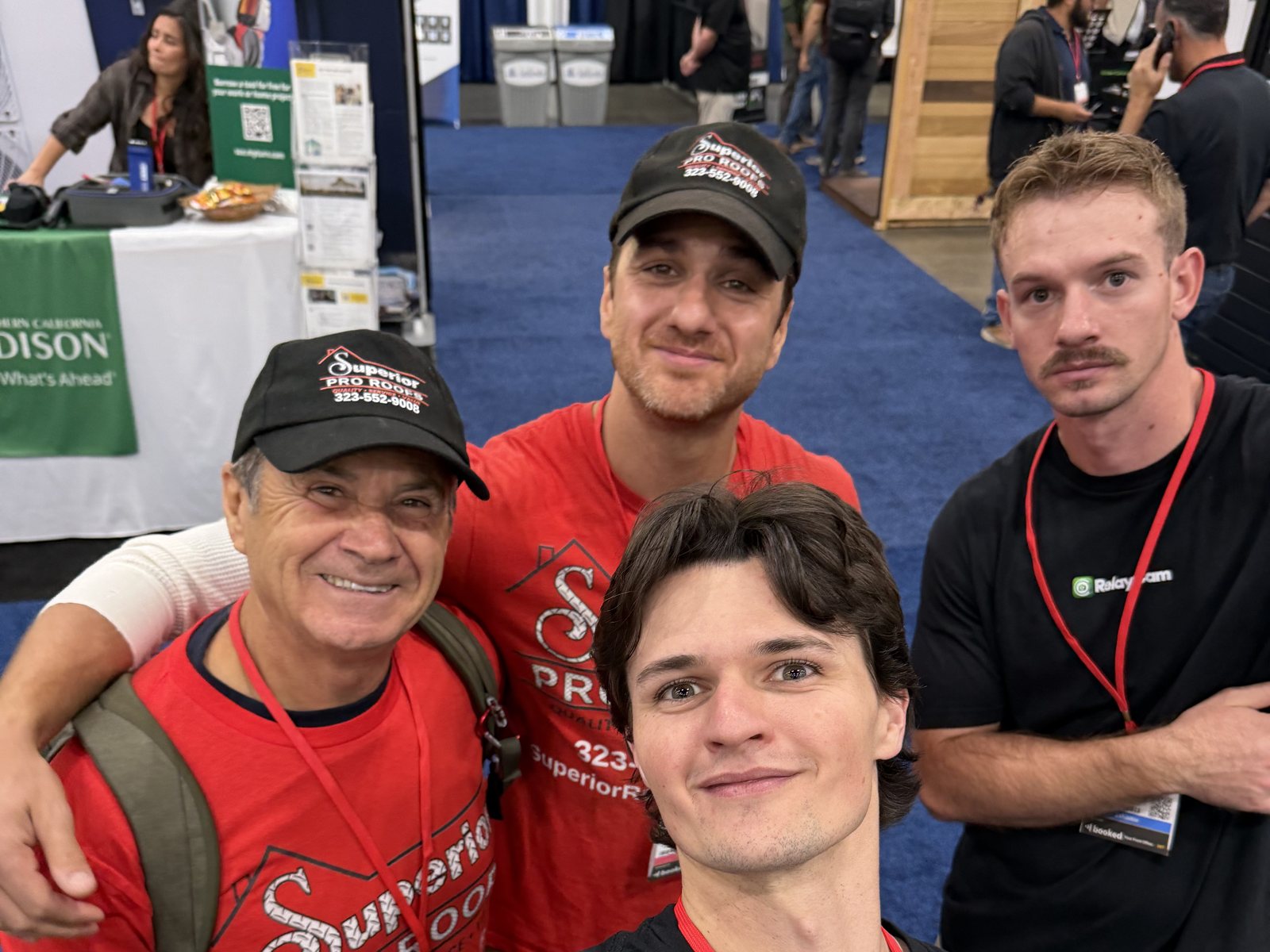
On November 4 and 5, our team set up at the Los Angeles Build Expo at the Los Angeles Convention Center. Over two days we met general contractors, remodelers, specialty trades like cabinets, glass and fencing, and architects from across Southern California.

The short version:
- Every trade runs on photo evidence. General contractors, remodelers, specialty trades and architects all need proof of the work.
- Most jobs aren't one crew. Several trades share the site, and the photos end up split across everyone's phones.
- That's where an intelligence layer matters: one shared record of the job that every trade can add to, with the office work handled for them.
The big takeaway: every trade on the job needs the same record
Every trade we talked to needs proof of the work: for the client, the inspector, the next trade on site and the dispute nobody saw coming.
What stood out in LA was how much of that work is shared. A single project can bring a general contractor, a cabinet installer, a glass company and an architect onto the same site, often over the same week. Each one takes their own photos. Each one has their own way of keeping them. When the client or the inspector asks what happened, someone has to pull it all together, and that someone is usually the owner or the office.
That puts two demands on whatever a team uses, and both get sharper when a job is shared:
- Reliable. Every photo has to end up with the right job, no matter whose phone took it.
- Easy for everyone. That includes the people who don't work for you. If a sub needs training or a paid seat to add a photo, the photo doesn't get added.
We heard the same story about the tools people had tried. Procore is built for big commercial projects, not the steady volume of jobs these crews run. Google Drive isn't made for the field. Project management tools have too much going on for someone on a ladder. So the record stays split, and the cleanup lands on whoever is holding the job together.
Why first-generation tools can't close the gap
The problem isn't only that these tools weren't designed for the person on site. It's when they were designed. First-generation job software carries a decade of decisions: screens built for the office, forms someone has to fill in, and habits that assume a person will sort, tag and write everything up by hand. AI gets added on top as a feature, but the product underneath still expects people to do the work.
What's possible has changed fast. In the last six months, AI agents have gone from novelty to doing real work: understanding what's in a photo, turning a spoken walkthrough into a finished report, and keeping a job record organized without anyone touching it. Tools built for the old way of working can't fully take advantage of that without starting over.
That sets a new bar. Any job software built before this shift, no matter how established, now has to reinvent itself to be crew-first and agent-first, or fall behind the people it's supposed to serve. Adding an AI button to the old product isn't the same thing.
That's the work we've done with RelayCam. Instead of bolting AI onto the old way of working, we built the crew's day around it. It's the next generation: the crew captures, and agents do the rest.
What we heard at the booth
"They're all in my camera roll"
When we asked how people manage job photos today, the answer at nearly every conversation was the same: the camera roll. The photos exist, but they sit next to receipts and family pictures, and finding the right shot for a client or an inspector means scrolling. That's why we built RelayCam to pull job photos out of the camera roll and match them to the right job automatically, by where they were taken.
"Every trade has its own photos"
General contractors told us the hardest photos to get are the ones other trades take. That's why we made RelayCam Guests a core part of the product, and why guests are included in RelayCam plans. Subs, other trades and architects can join a job and add their own photos to the same record, without anyone paying for an extra seat.
"Clients keep asking for updates"
Homeowners, GCs and architects all want to see progress, and every update is another text. That's why we built a way to share a job with a single link that keeps itself up to date.
"The paperwork never ends"
Reports, daily logs and closeout summaries were the part people dreaded most. That's why we built AI agents into RelayCam that handle the paperwork for you. Walk the job and talk, and the report writes itself. The day's photos become a daily log before you leave the site. At the end of a project, the recap is ready to send.
Where RelayCam fits
RelayCam is the intelligence layer for the job site, and the most elegant tool a crew member can carry. On a shared job, it's the one record every trade can add to.
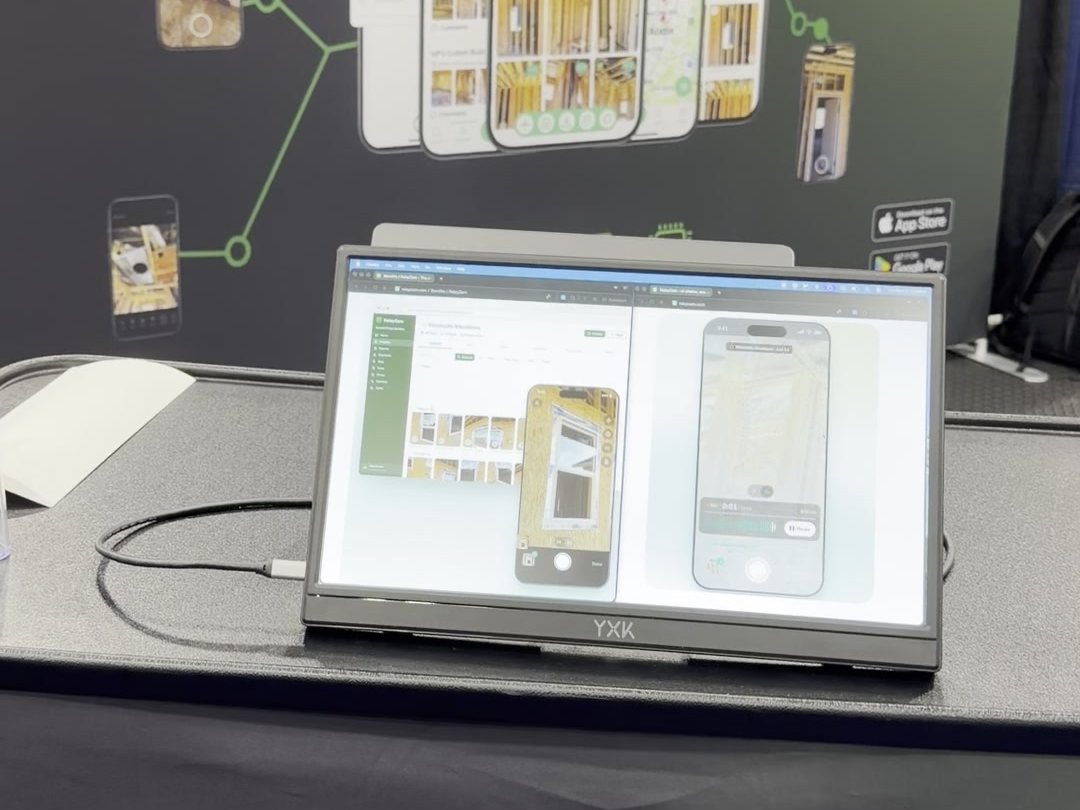
Everyone on site does one simple thing: point, shoot, keep working. RelayCam does the rest. It puts each photo in the right job, keeps it easy to find, and turns a day of photos into something the office can hand over: a report, a progress update, a clean set of photos for the inspector. It works alongside whatever each company already runs, whether that's a CRM or just a phone and a spreadsheet.
And it compounds. Every job adds to a visual record of the work, one that gets more useful with every photo and every trade that contributes to it.
The need reaches every trade where the work has to be proven, and every job where trades work side by side. That's why RelayCam is a staple for crews of every size, from the owner-operator to the multi-crew operation.
From the booth

What's next
Thanks to everyone who stopped by, and to the Build Expo USA team. If we met in LA, expect to hear from us. If we didn't, get started and try it on your next job.
We'll keep sharing what we learn in the field, show by show.
See RelayCam in action
Start your free trial now by clicking the button below


Wanna chat or demo?
Questions? Concerns? Requests? Talk to a real human

Watch a RelayCam demo now
Short on time, busy, got jobs to do? See how RelayCam works now!