
related blog

14
Real-Time Tools vs. Traditional Communication in Construction
Explore how real-time communication tools are transforming construction, enhancing speed, accuracy, and collaboration over traditional methods.
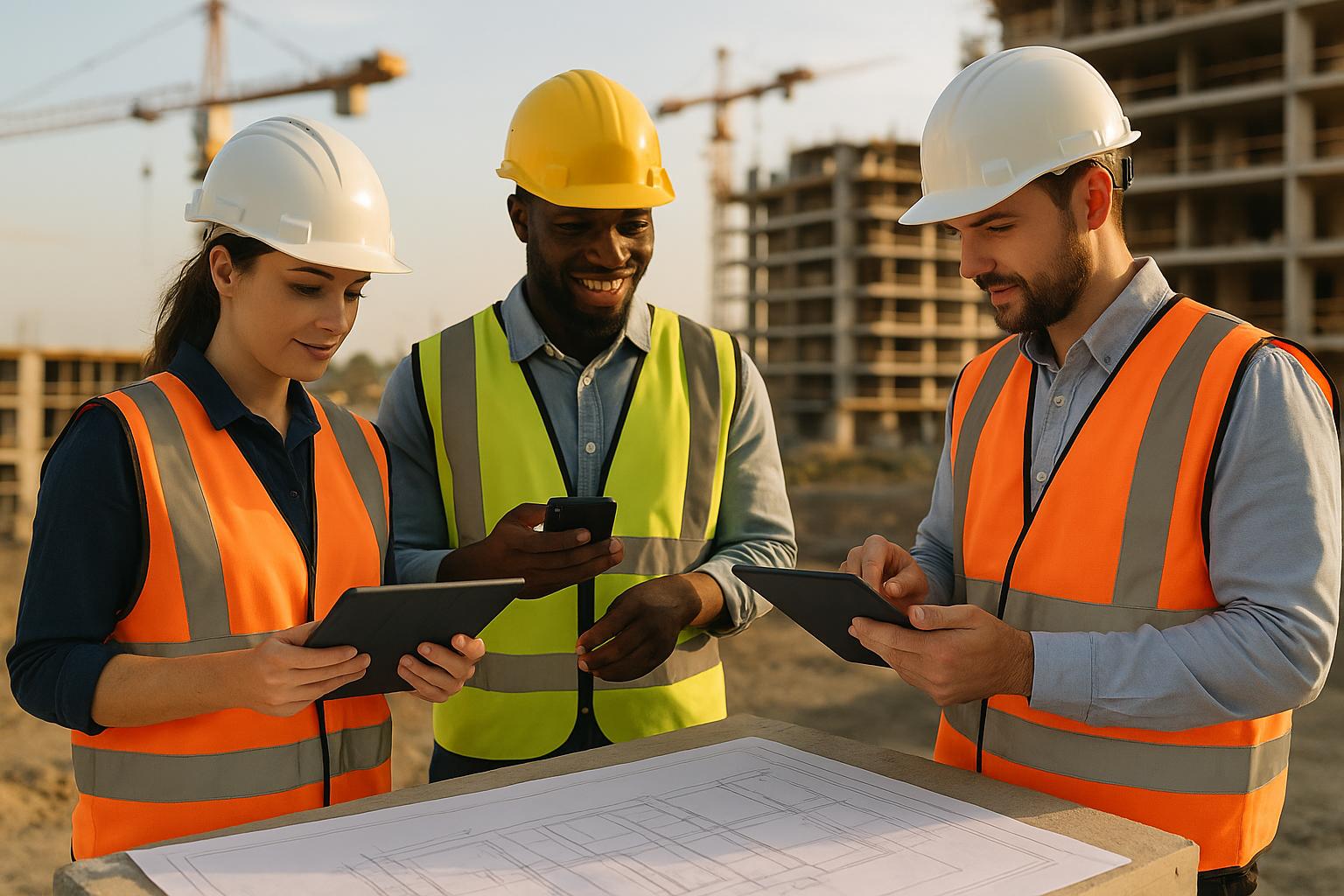
Clear communication is critical in construction. Misunderstandings can lead to delays, rework, safety risks, and budget overruns. This article compares two approaches: real-time digital tools and older methods like phone calls, emails, and face-to-face meetings.
Key Takeaways:
- Real-time tools (e.g., RelayCam) provide instant updates, GPS-tagged documentation, and centralized cloud storage. They improve speed, accuracy, and collaboration.
- Older methods like paper logs, phone calls, and emails are still widely used but often lead to delays, errors, and scattered information.
- Digital tools reduce disputes with precise records, streamline workflows, and enable faster decision-making.
Quick Comparison:
| Aspect | Real-Time Tools | Older Methods |
|---|---|---|
| Speed | Instant updates | Delayed by manual processes |
| Documentation | GPS-tagged, time-stamped records | Prone to errors and missing details |
| Accessibility | Centralized cloud storage | Scattered across multiple formats |
| Task Management | Integrated checklists with live tracking | Requires manual coordination |
| Collaboration | Real-time updates for all team members | Information silos |
Real-time tools excel in fast-paced environments, while older methods still work for urgent, on-the-spot communication. Adopting the right mix ensures efficiency and accuracy in managing construction projects.
Conversations in Construction: Selecting the Right Tech Tools
Effective project management relies on streamlining team communication to prevent delays and ensure all stakeholders remain aligned.
Real-Time Communication Tools in Construction
Real-time communication tools are changing the way construction teams share updates, document progress, and coordinate work across job sites. These platforms provide instant connectivity, helping projects stay on track and move forward efficiently.
Main Features of Real-Time Tools
Modern construction communication platforms are designed to address the need for quick and reliable communication. They focus on instant visual documentation and live project updates, ensuring teams stay aligned throughout the day. Instead of relying on end-of-day reports or weekly meetings, these tools capture and share information as it happens.
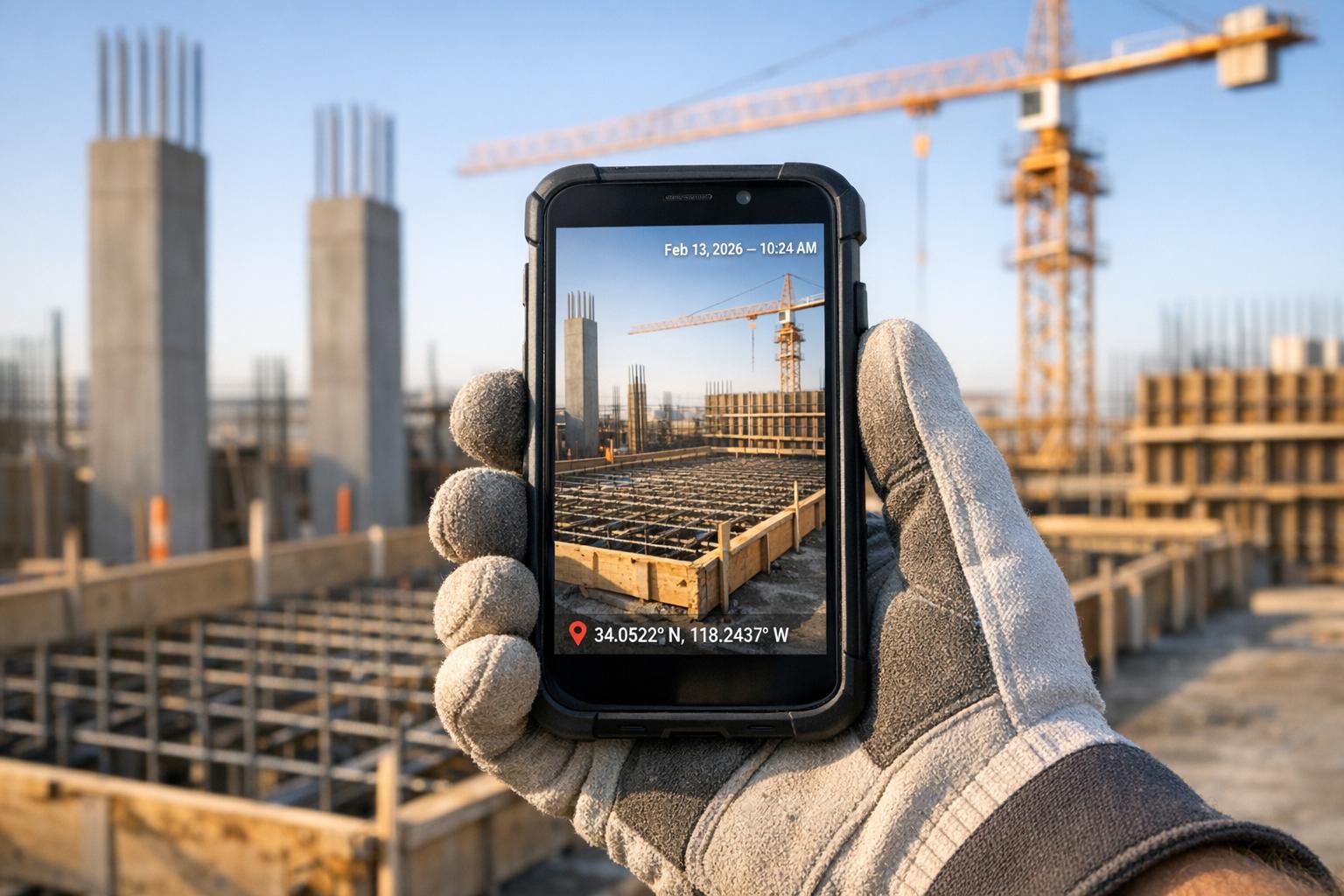
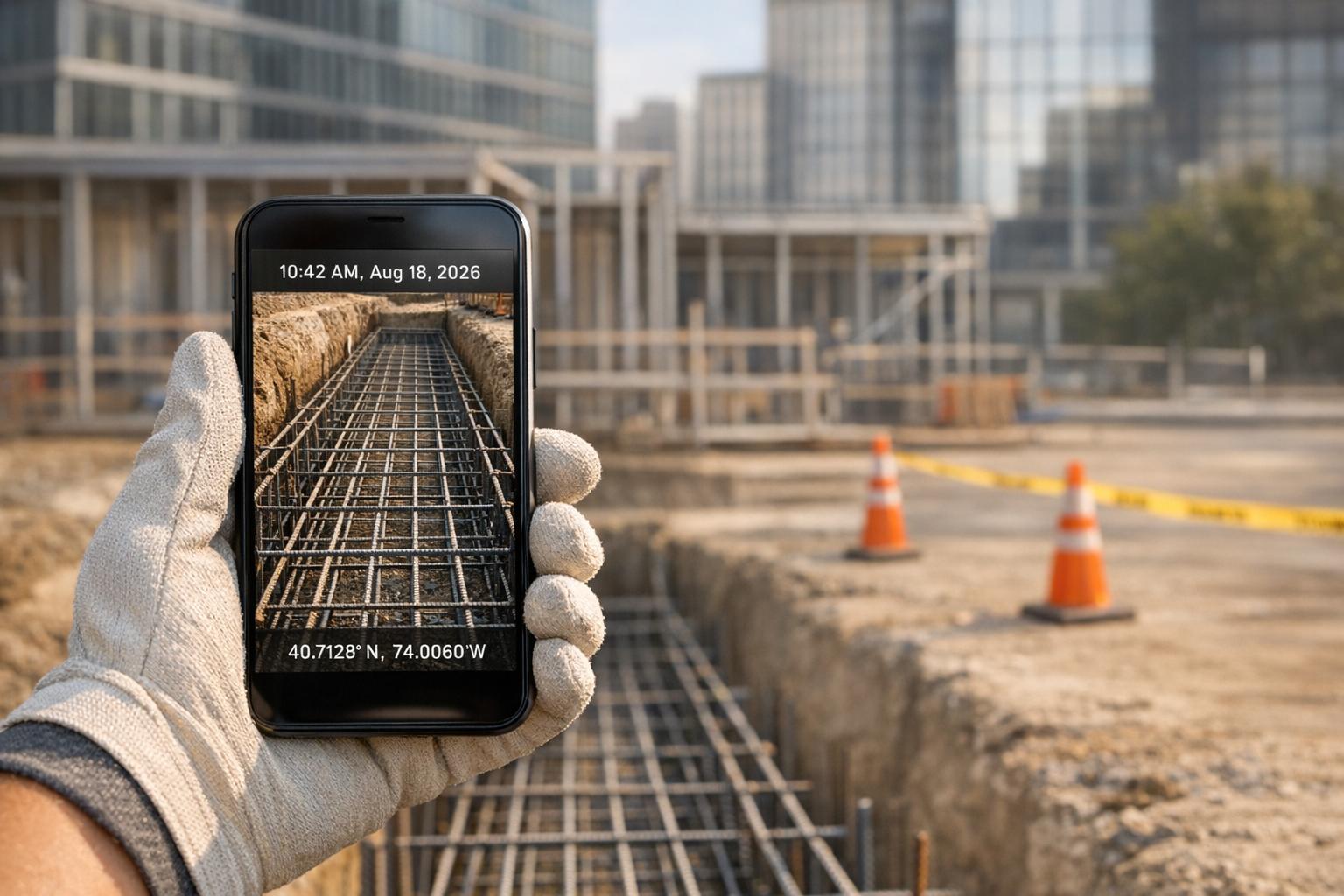
One key feature is GPS and time-stamped documentation. Tools like RelayCam embed GPS coordinates and timestamps into every upload, creating a permanent record of when and where documentation was created. This eliminates disputes over project timelines and progress milestones by providing clear, verifiable data.
Live project feeds act as a shared hub where all team members can access updates from multiple job sites in real time. For example, when a field supervisor uploads progress photos or flags an issue, the entire team is instantly notified, ensuring decision-makers have the latest information at their fingertips.
On-photo annotations and comments make it easy to clarify issues directly on images. Team members can draw on photos, add notes, and leave feedback tied to specific visual elements, reducing the need for lengthy written explanations.
With cloud storage, project documents are accessible from any device, anywhere. Automatic backups and syncing mean that field crews’ uploads are immediately available to office staff, clients, and subcontractors, ensuring everyone stays on the same page.
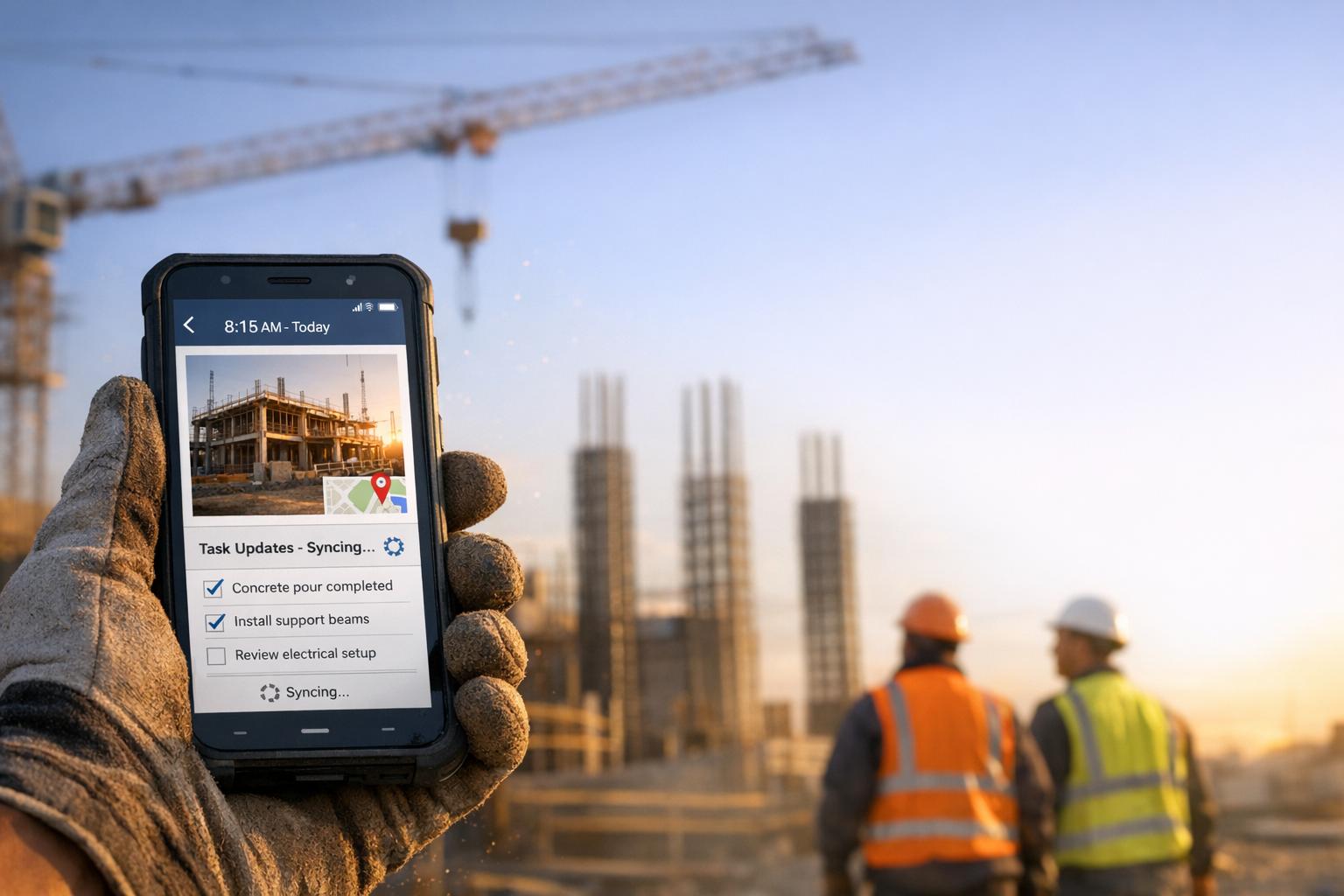
Project-based organization and checklists help teams manage tasks and deliverables efficiently. Digital checklists can be customized for each phase of a project, often requiring photo documentation for specific tasks. This structured approach ensures consistent standards across all teams and projects.
How Construction Teams Benefit
Real-time tools help construction teams avoid the communication delays that often slow down projects. For instance, if a plumbing crew encounters an unexpected issue that could impact the next day’s electrical work, they can instantly share photos and details with the electrical contractor. This immediate exchange of information allows for quick problem-solving and schedule adjustments, preventing costly delays.
Accountability naturally improves when team activities are documented with timestamps and locations. Subcontractors can provide proof of completed work with dated photos, while project managers can monitor productivity across crews and job sites. This transparency helps reduce disputes and fosters a sense of responsibility among team members.
Better client relationships are another advantage. Real-time tools allow clients to access shared photo galleries that show daily progress, eliminating the need for frequent site visits or lengthy status meetings. This level of transparency builds trust and helps avoid misunderstandings that can strain client relationships.
Streamlined workflows are achieved by integrating communication and documentation into a single platform. Instead of juggling multiple systems for photos, notes, task lists, and messaging, teams can manage all project communication in one place. This not only simplifies training for new team members but also reduces the risk of losing important information across different platforms.
Lastly, offline functionality ensures that documentation continues uninterrupted even in areas with poor or no cellular coverage. Teams can capture updates offline and automatically sync them once they reconnect, a critical feature for projects in remote locations or buildings with limited network access.
The adoption of real-time communication tools isn’t just about keeping up with technology; it’s about transforming how construction teams collaborate and maintain momentum. These tools provide immediate benefits, setting the stage for a comparison with traditional methods.
Standard Communication Methods in Construction
Even as digital tools become more prominent, traditional communication methods remain foundational in construction. These time-tested approaches are still widely used to share information, coordinate tasks, and document progress on job sites. Understanding these methods is essential for recognizing their strengths and limitations.
Common Standard Methods
Face-to-face meetings are a cornerstone of communication in construction. Daily site meetings, toolbox talks, safety briefings, and Owner, Architect, Contractor (OAC) meetings allow teams to address updates, confirm plans, and solve immediate issues. These in-person interactions are invaluable for building trust and ensuring that complex messages are fully understood.
"Standardizing face-to-face interaction really works because you lose a lot of detail when you don't have human interaction. Things can get lost to interpretation, and some things just can't be explained in a digital format."
- Alison Hart, Senior Manager of Project Solutions, Mortenson
Phone calls offer a quick and direct way to communicate, especially when a situation requires immediate attention or is too complex to explain in writing. Field supervisors often rely on phone calls to coordinate with suppliers, report urgent issues, and clarify instructions.
Email communication is the go-to method for formal correspondence. Project specifications, change orders, daily reports, submittals, and meeting minutes are typically handled via email, creating a written record that is critical for documentation.
Paper-based documentation continues to play a key role. Physical blueprints, logs, safety reports, and meeting minutes are used to track progress and decisions.
Walkie-talkies are indispensable on noisy job sites, enabling instant verbal communication for coordination and safety.
Construction boards and job site work boards provide a visual way to share daily schedules and important updates. These boards ensure that everyone, even those without access to digital tools, stays informed.
Hand signals are essential in situations where verbal communication isn't practical, such as during crane operations or equipment handling. These nonverbal cues help maintain safety and precision.
Formal documentation processes like Requests for Information (RFIs) and submittals follow structured protocols. RFIs allow contractors to seek clarification from design teams, while submittals document materials or components for review and approval.
While these methods have served the industry well, they come with challenges that modern tools aim to address.
Problems with Standard Communication
Traditional communication methods often introduce hurdles that can disrupt project timelines and budgets. One of the biggest issues is delayed information exchange. Paper-based processes and manual approval workflows can create bottlenecks. For instance, a change order requiring multiple physical signatures might take days or even weeks to finalize, causing unnecessary delays.
Statistics highlight the impact of these inefficiencies: only 37% of projects are completed on time using traditional communication methods, and just 52% meet their original goals when communication breaks down. Alarmingly, poor communication contributes to the failure of 48% of construction projects.
Tracking documentation is another major challenge. Paper blueprints can go missing, daily logs may be misplaced, and critical documents often end up buried in filing cabinets. These issues not only slow down workflows but are also a leading cause of disputes in the industry.
The reliance on multiple manual channels also increases the risk of miscommunication. Verbal instructions, for example, can be interpreted differently by various team members, leading to confusion and errors by the time the message reaches workers on-site.
The consequences of poor communication go beyond delays and mistakes. Around 80% of employees report feeling stressed and overwhelmed due to ineffective communication, while 36% have felt unsafe on the job because of it. According to the Project Management Institute (PMI), poor communication is one of the top reasons for project failures.
Additionally, the administrative burden of juggling phone calls, emails, and paper documents across disconnected systems eats up valuable time. Project managers often find themselves chasing down information or following up on requests, which detracts from their ability to focus on higher-priority tasks.
Finally, the lack of a centralized system means that critical project information is scattered across various people, locations, and formats. This fragmentation makes it difficult to access up-to-date plans or track the status of change orders. As a result, teams risk making decisions based on incomplete or outdated data.
While these traditional methods are deeply ingrained in the construction industry, their inefficiencies highlight the growing need for modern, real-time communication tools that can streamline processes and improve outcomes.
sbb-itb-69746f9
Real-Time Tools vs. Standard Communication Methods
When comparing real-time communication tools to traditional methods, the differences become striking, especially in how they tackle the daily challenges of construction projects. While both have their uses, the efficiency and reliability of each can significantly influence project outcomes.
| Aspect | Real-Time Tools | Standard Communication Methods |
|---|---|---|
| Speed of Communication | Instant updates and notifications for all team members | Delays from phone tag, email chains, or physical documents |
| Documentation Accuracy | GPS-tagged, time-stamped records with photo evidence | Manual logs prone to errors and missing details |
| Information Accessibility | Centralized cloud storage accessible from any device | Scattered across emails, cabinets, and personal devices |
| Task Management | Integrated checklists with real-time progress tracking | Requires manual coordination across separate systems |
| Team Coordination | Live project feeds keep everyone updated simultaneously | Information silos needing multiple touchpoints |
| Record Keeping | Automatic digital archives that organize data efficiently | Physical documents that can be lost or damaged |
| Change Management | Instant updates and streamlined approvals | Multi-step processes causing delays |
| Risk Mitigation | Visual documentation with on-photo annotations | Verbal instructions prone to misinterpretation |
This side-by-side comparison highlights how digital tools deliver speed, clarity, and dependability over traditional methods.
Why Real-Time Tools Work Better
Real-time tools address the delays and inefficiencies inherent in older communication methods. For instance, when a safety issue arises on-site, digital tools can notify the entire team in seconds. In contrast, traditional approaches might take hours - or even days - to relay the same information.
Visual documentation best practices are another game-changer. Tools like RelayCam capture GPS-tagged, time-stamped photos that serve as indisputable records of progress. Features such as photo annotations and checklists and comments ensure complex issues are communicated clearly, avoiding the misunderstandings often caused by verbal instructions or handwritten notes.
Centralizing data in the cloud eliminates the chaos of scattered files. This streamlined approach reduces the administrative load on project managers, freeing them up to focus on more critical tasks. Real-time collaboration adds another layer of efficiency. For example, field workers can upload images, supervisors can annotate them, and project managers can update checklists - all through a live project feed. This synchronized communication keeps everyone informed instantly, which is vital on fast-moving construction sites.
Digital tools also improve reliability. They create permanent, searchable records that prevent miscommunication or lost documents. In cases of disputes - a frequent issue in construction - time-stamped, GPS-tagged documentation provides the clear evidence needed to resolve matters quickly.
When to Use Each Method
Despite the advantages of real-time tools, traditional methods still have their place. For urgent or complex situations, face-to-face meetings, phone calls, or walkie-talkies remain indispensable. These methods are especially effective for safety briefings, on-site coordination, and immediate problem-solving.
On the other hand, real-time tools shine in areas like documentation and progress tracking. Digital platforms make organizing, searching, and sharing information seamless, outperforming paper logs and fragmented systems. For instance, managing change orders is far more efficient with digital workflows, which cut down approval times compared to circulating physical documents for signatures.
Quality control and inspections are also better managed with real-time tools. By capturing visual evidence and organizing it by project phases, teams can instantly share critical updates with stakeholders. RelayCam’s checklist features, combined with its ability to document tasks visually, allow for systematic verification while keeping clear records of completed work. Choosing the right method for each scenario ensures both efficiency and accuracy in project management.
How Communication Tools Affect Project Results
Choosing between real-time communication tools and traditional methods can significantly influence project outcomes, from meeting deadlines to avoiding disputes.
Speed and Meeting Deadlines
Real-time communication tools give construction teams the ability to spot and address potential delays before they escalate, ensuring smoother workflows and better adherence to schedules. When on-site issues arise, digital tools allow for immediate responses, eliminating the long waits associated with traditional calls or emails.
This speed advantage is especially critical when managing resources and making key decisions. With real-time data, contractors can make informed on-site choices, reducing the need for changes and minimizing downtime. For example, field teams can quickly alert supervisors about material shortages, equipment malfunctions, or safety concerns, ensuring that problems are addressed without delay.
Mobile devices and instant messaging create a direct link between team members, enabling quick decision-making and problem-solving. This reduces bottlenecks, errors, and delays that often disrupt project timelines. Additionally, digital workflows streamline administrative tasks, freeing up project managers to focus on more pressing issues rather than chasing status updates.
Real-time updates also ensure that all stakeholders - whether project managers, contractors, or field teams - are aligned. This shared understanding fosters faster, more confident decision-making and strengthens accountability with precise, up-to-date records.
Better Record Keeping and Accountability
Speed is essential, but thorough documentation is equally vital for accountability and resolving disputes. Traditional paper-based systems often leave gaps that can result in disagreements or liability issues. Real-time tools solve this problem by creating permanent, searchable records that clearly document project progress and decisions.
For instance, RelayCam uses GPS-tagged, time-stamped photos to document work, site conditions, and changes. These images serve as immediate evidence, simplifying dispute resolution and removing ambiguities. When questions arise about whether work meets specifications, these records provide instant verification.
On-photo annotations add another layer of detail, creating visual records that go beyond handwritten notes, which are often prone to being lost or misinterpreted. Live project feeds further enhance transparency, keeping all stakeholders informed in real time. This visibility naturally encourages higher-quality work and greater attention to detail.
RelayCam’s checklist functionality also introduces a systematic approach to verifying completed tasks. Each step is documented with visual proof, creating an audit trail that supports both internal quality control and external inspections. This reduces the risk of missed items that could lead to callbacks or warranty claims.
Finally, cloud storage ensures that records are securely preserved and easily accessible, unlike paper files that can be damaged by weather, fire, or human error. By combining immediate communication with reliable documentation, these tools play a key role in meeting deadlines and minimizing disputes, setting projects up for success.
Conclusion
The transition from older communication methods to real-time tools has redefined how construction teams work. Traditional approaches simply can’t match the speed, accuracy, and comprehensive documentation provided by modern digital platforms.
Key Takeaways
Real-time communication tools bring three major benefits that traditional methods struggle to deliver.
- Speed: Instant messaging, live updates, and quick photo sharing cut out the delays of phone calls and email chains. For example, when a safety issue arises or materials don’t meet specifications, teams can resolve problems in minutes rather than waiting hours or days.
- Reliability: Automatic documentation ensures a dependable record of events. GPS-tagged and time-stamped photos provide verifiable proof, while on-photo annotations clarify details that verbal descriptions often miss. This reduces disputes and lowers the risk of liability.
- Collaboration: These tools keep everyone on the same page, no matter where they are. Live project feeds ensure that field crews, project managers, and clients all access the same updates in real time. This transparency boosts accountability, improves work quality, and minimizes the miscommunication that often leads to costly rework.
The numbers back up these advantages. Companies using tools for construction site documentation report project completion times that are up to 30% faster and a 25% reduction in rework due to better communication and documentation. A 2024 survey revealed that over 70% of U.S. construction firms now use at least one real-time communication app, citing faster issue resolution and improved team coordination as the biggest benefits.
These tools are reshaping workflows and driving better project outcomes.
Next Steps
To take advantage of these benefits, RelayCam offers a practical solution tailored to address communication and documentation challenges on the jobsite. By leveraging GPS and time-stamped photos, RelayCam ensures that every project has a reliable, detailed record. Features like on-photo annotations make feedback and instructions crystal clear, while the live project feed keeps everyone aligned in real time. Systematic photo checklists further streamline task verification.
For teams looking to modernize, the first step is identifying where communication breakdowns are causing delays or errors. RelayCam’s unlimited cloud storage and organized project galleries eliminate the risk of lost documentation, while its sharable photo galleries make client communication and approvals seamless.
As the construction industry moves toward mobile, cloud-based solutions that emphasize visual documentation and real-time collaboration, early adopters will gain a competitive edge. With tools like offline functionality and desktop access, RelayCam ensures smooth documentation under any jobsite conditions. Teams adopting these tools today are setting themselves up for faster project delivery, fewer disputes, and stronger client relationships.
FAQs
How do real-time communication tools improve accountability and help prevent disputes in construction projects?
Real-time communication tools enhance team accountability by providing instant updates, precise documentation, and effortless collaboration. Features like geo-tagged photos, time-stamped records, and on-photo annotations ensure that every detail is captured accurately and shared with the entire team. This level of visibility keeps everyone on the same page and minimizes the chances of miscommunication.
These tools also create a comprehensive, real-time record of project activities, decisions, and changes, which can be invaluable in preventing disputes. When disagreements arise, documented evidence - such as annotated photos or live project updates - can quickly clarify misunderstandings and resolve conflicts. This not only builds trust among stakeholders but also helps ensure projects stay on track without unnecessary delays.
What are the benefits of using real-time communication tools instead of traditional methods in construction projects?
Real-time communication tools bring a lot to the table when it comes to managing construction projects efficiently. They deliver instant updates, keeping everyone - team members and stakeholders alike - aligned. This helps cut down on delays and makes decision-making smoother and quicker.
These tools also improve team collaboration by acting as a central hub for information. Teams can share updates, photos, and tasks in real time, which helps reduce mistakes, keeps workflows moving, and boosts overall productivity. Plus, features like time-stamped documentation and on-photo annotations ensure that communication is crystal clear and records are reliable - key elements for staying organized and avoiding potential disputes.
When might traditional communication methods be better than real-time tools in construction?
Traditional communication methods - think face-to-face conversations, printed plans, or even walkie-talkies - shine in situations where technology just isn't an option. Take remote job sites with spotty internet or offline work environments, for instance. These methods ensure that communication keeps flowing, no matter the circumstances.
They’re also perfect for fast, no-nonsense exchanges in scenarios where digital tools might slow things down. Emergencies or noisy environments are great examples, where quick, clear communication is absolutely essential. By sticking with these tried-and-true approaches, teams can stay on the same page, even when conditions are less than ideal.
Related Blog Posts
See RelayCam in action
Start your free trial now by clicking the button below


Wanna chat or demo?
Questions? Concerns? Requests? Talk to a real human

Watch a RelayCam demo now
Short on time, busy, got jobs to do? See how RelayCam works now!