
related blog

RelayCam News
7 Min Read
RoofCON 2026: the next wave starts in the field
We spent three days at RoofCON 2026 in Oklahoma City, and demand ran ahead of us the whole time. The takeaway: roofing is ready for a job site that reports on itself.


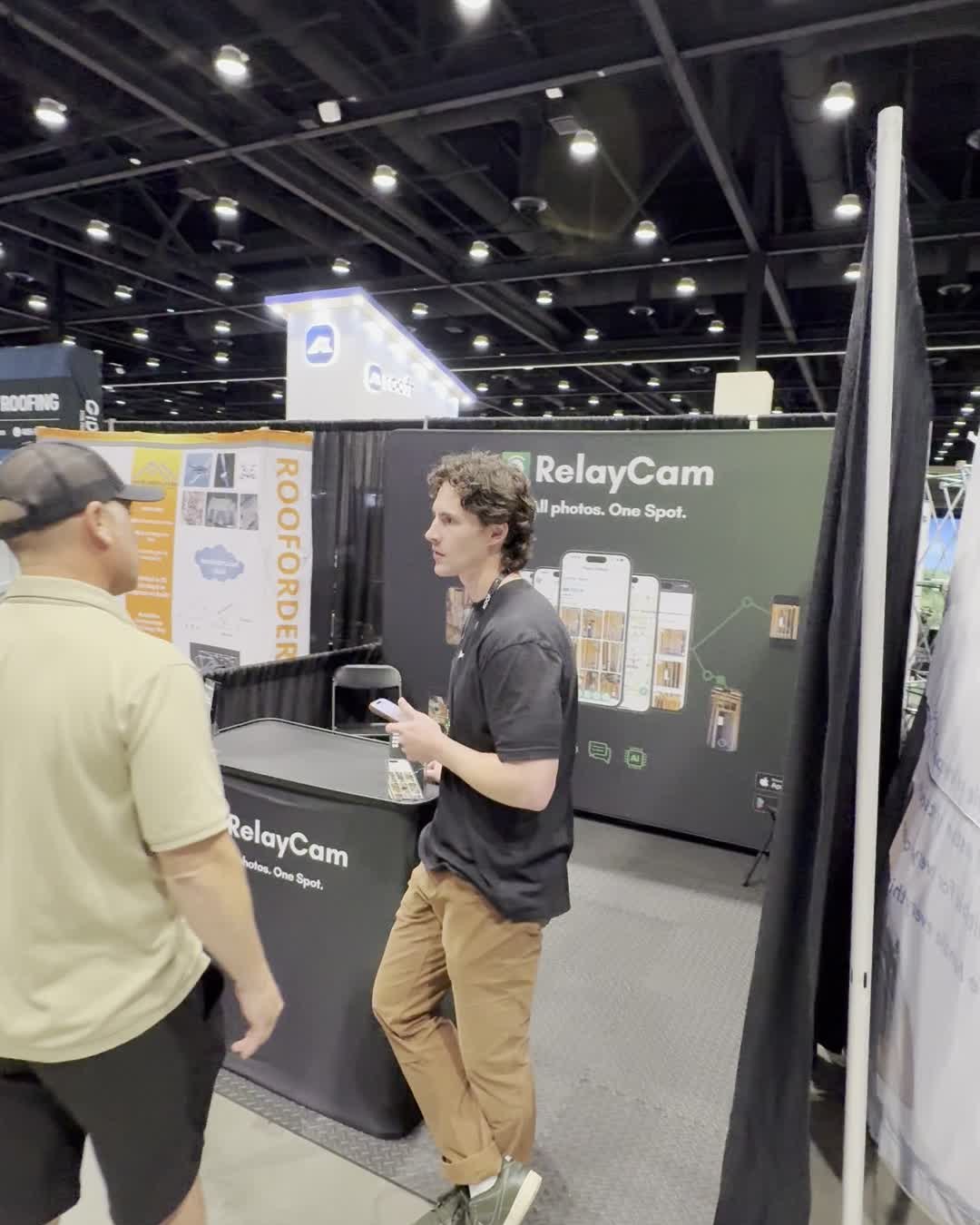
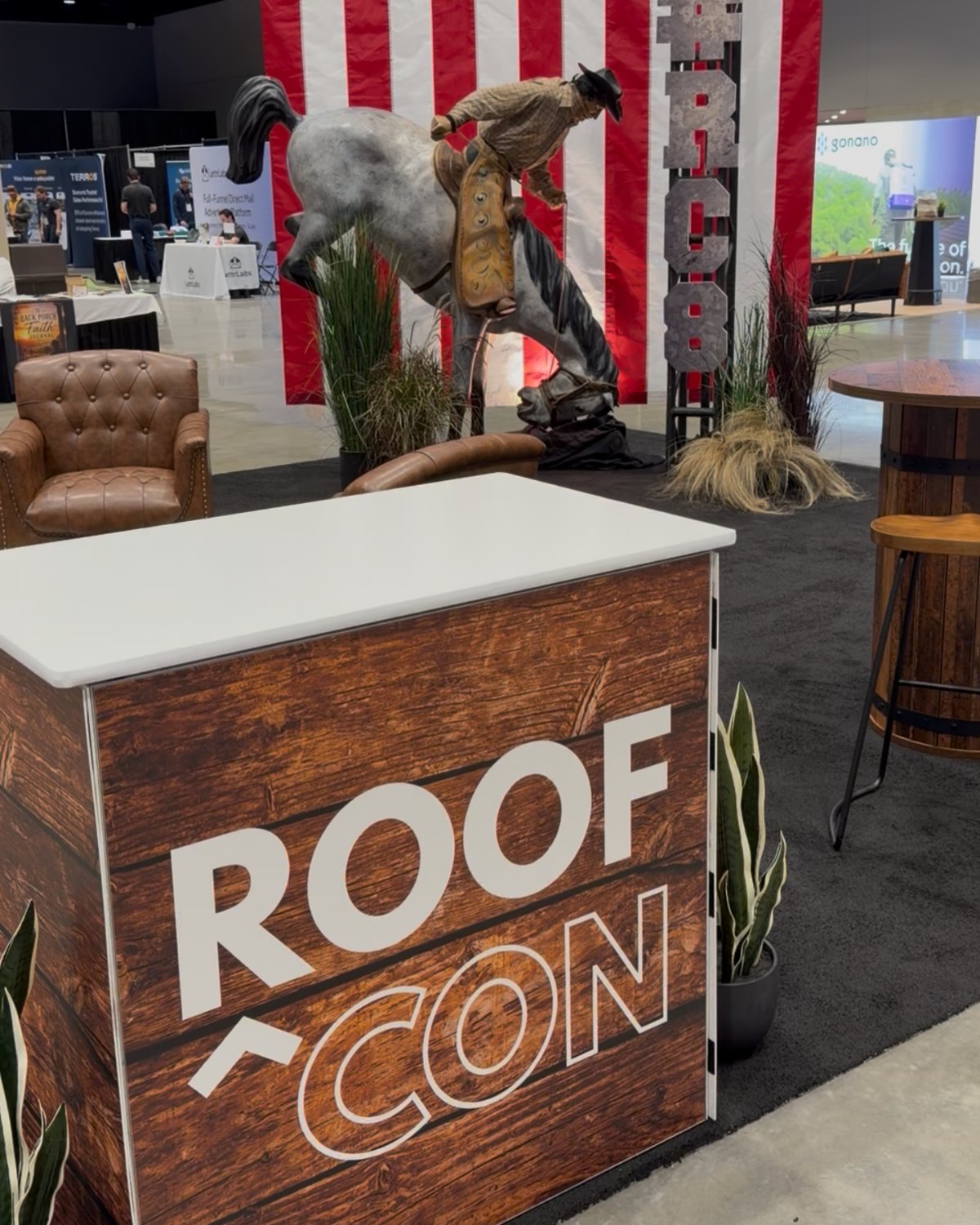
From November 10 to 12, our team spent three days at RoofCON 2026 at the Oklahoma City Convention Center. RoofCON brings roofing owners, executives and operators together for a general session, more than 50 breakout sessions and an expo floor with more than 175 vendors. We went to listen. We came home with more conversations than our team could keep up with.

The short version:
- Demand ran ahead of us. For long stretches, more roofers wanted to see RelayCam than we had people to show them.
- Roofing owners want the job site to report on itself, with the photos captured, sorted and ready for the office.
- That's the intelligence layer for the job site. Roofing is ready for it now, and the companies that adopt it first will run leaner than everyone else.
The demand signal
Trade shows are a noisy way to measure anything. Plenty of people walk by. Most keep walking. So the number that matters is how many people stop, take out their phone and ask to see it work on a real job.
At RoofCON, that happened all day: owners, office managers and production leads, all asking the same question. What happens to a photo after the crew takes it? We had a small team on the floor, and for most of the show it wasn't enough.
What roofers kept asking
"Will my crew actually use it?"
Every owner has a list of apps the crew stopped opening. So the first test is always the person on the roof. When owners saw a photo land in the right job without anyone tagging or sorting it, the question changed from whether the crew would use it to how fast they could roll it out.
And the bar in the field is unforgiving. A crew member on a steep pitch, gloves on, in the heat or the wind, has no patience for an app that lags, freezes or loses a photo. One failed upload and the photos go back to the camera roll for good. Up there, stability and speed are the product. The app has to work every time, one-handed, on a bad signal. Anything short of world-class doesn't survive the first week on the roof.
"Does it work with our CRM?"
The job lives in the CRM, and nobody wants to give that up. But most of the CRMs and job tools roofers run today were designed for someone in the office filling in forms, years before AI agents could read a photo or write a report. They're good at holding the job. They weren't built to understand what happened on it. RelayCam sits alongside the CRM and handles that part, so photos and job details flow back without anyone copying them over. JobNimbus connects directly, and our integrations cover a growing list of the tools roofers already run.
"Who is this built for now?"
This one came up more than we expected. Owners described photo apps they'd used for years that had changed underneath them: new tiers, higher prices, features that used to come standard moving into bigger plans, and a product that seemed to be chasing larger accounts. The crews and small offices that made those tools popular felt left behind. What they wanted was a tool that still treats the person on the roof as the main customer.
Underneath it was a wider frustration with first-generation tools. Most of what roofers run today was designed before AI, around forms, folders and manual tagging. That design still costs them every day: crews skipping steps, office staff sorting photos by hand, reports built from scratch. When owners saw a tool built for this era, where the crew just shoots and the office work happens on its own, it clicked. Simpler in the field, more capable in the office.
"Where does AI fit?"
AI was on banners all over the RoofCON expo floor. A lot of it was a chat window bolted onto tools designed before agents existed, and roofers saw through that fast. What they wanted was the result: walk the roof, talk through what you see, and the report writes itself.
Why now
In 2011, Marc Andreessen wrote that software is eating the world. This September he checked back in. The prediction came true, and the pace is about to change. Software, he wrote, has been eating the world "at the speed of human hands." Now it's about to do it "at the speed of compute." His partner Alex Rampell puts the next act more plainly: software is eating labor, doing the work itself and getting paid for results instead of seats.
In the trades, "the speed of human hands" is literal. The first wave of tools ate the office. CRMs, estimating, scheduling and invoicing turned paperwork into systems of record, and every one of them waits for someone to type. The office got faster. The field barely changed, because the person on the roof, in the crawl space or up the ladder doesn't have time to type.
The next wave is agents, and they move at the speed of compute. They see, listen and understand the job as it happens, then handle the office work on their own. That wave starts in the field, because that's where the job's data is born.
Every trade where the work has to be proven runs on photo evidence: roofing and restoration, remodeling, solar, electrical, general contracting. Photos sell the job, back the claim, prove the work and settle the dispute months later. They're the richest record of the work a company has, and for years they've mostly sat in camera rolls and shared folders.
Three shifts make this the moment:
- Every crew carries the sensor. A good camera, a microphone and a data connection are in every pocket on every job.
- Agents can finally understand the job. They can read what's in a photo and what was said on site well enough to write the report, flag the issue and update the record.
- Companies have outgrown babysitting their tools. More crews, more jobs and more locations mean the old setup, where the office cleans up after the field, stops scaling.
Put those together and the job site can report on itself. RoofCON made it plain that roofing is ready. Roofing feels it first because it leans on photo evidence harder than almost anyone, but the same shift is coming to every trade that has to prove its work.
Where RelayCam fits
RelayCam is the intelligence layer for the job site. The crew does one simple thing: point, shoot, keep working. RelayCam puts each photo in the right job, keeps it easy to find, and turns a day in the field into something the office can act on: a report, a claim package, an update in the CRM.
Three choices make that work at scale. First, RelayCam is built for the person in the field, and it stays that way as companies grow. If the crew won't use it one-handed, nothing downstream matters. Second, it was built for agents that can see and listen, so they do the office work instead of waiting in a sidebar. Third, it works with the CRM a company already runs instead of trying to replace it. That puts RelayCam underneath the rest of the stack, as the layer every other system draws from. The more tools a company runs, the more RelayCam is worth to them.
And it compounds. Every job adds to a visual record of the company's work: what was there before, what changed and when. That record gets more valuable with every photo, it stays with the company whatever else it runs, and it's the foundation everything else on the job site will be built on.
From the floor
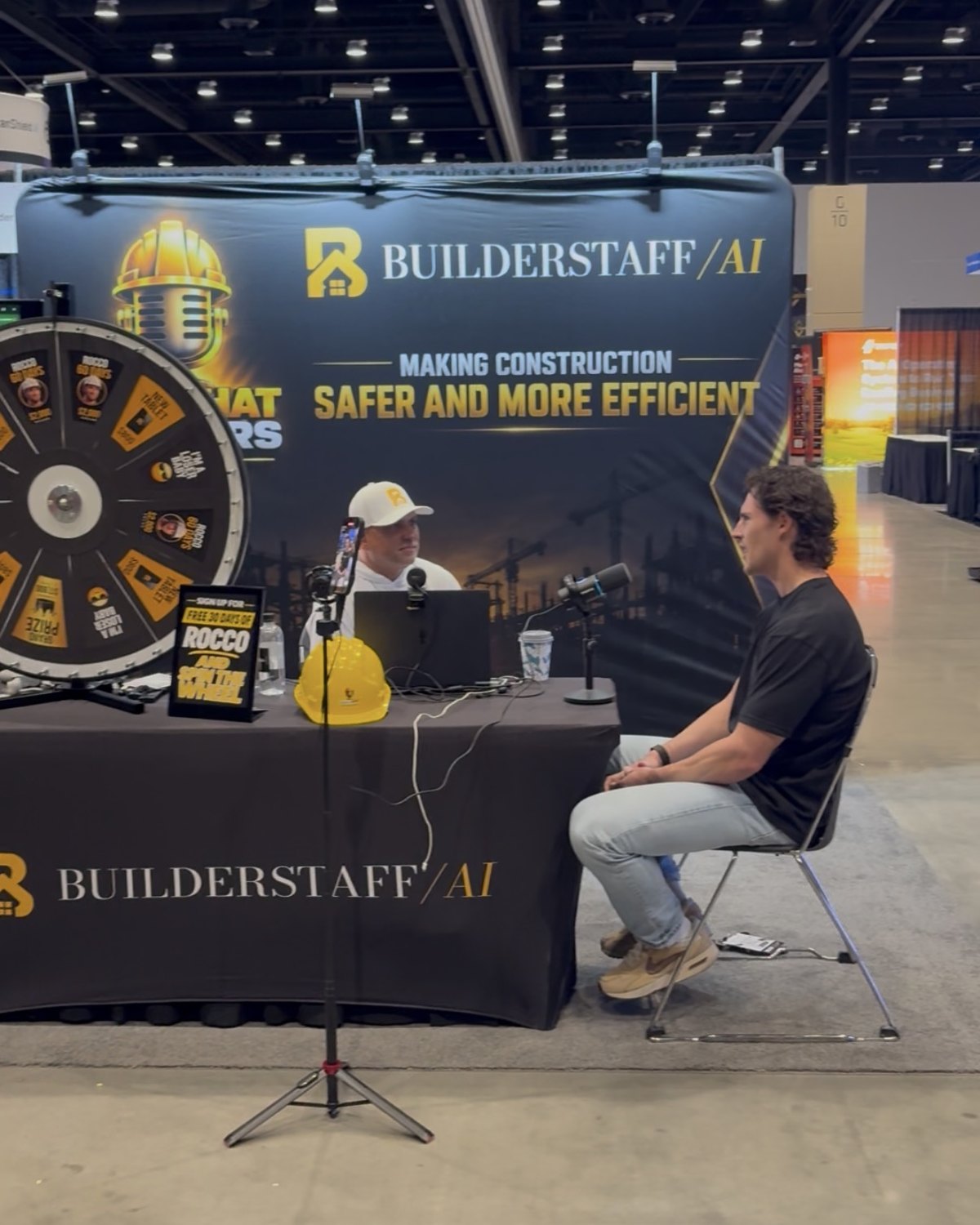
We also sat down with the BuilderStaff/AI team to talk live from the expo floor about what's going on in the industry and what we're learning in the field.
What's next
Thanks to everyone who stopped by, and to the RoofCON team for three great days in Oklahoma City. If we talked at the show, our team will follow up this week. If we didn't get to you, see how RelayCam works with JobNimbus or get started and try it on your next job.
We'll keep sharing what we learn in the field, show by show.


See RelayCam in action
Start your free trial now by clicking the button below


Wanna chat or demo?
Questions? Concerns? Requests? Talk to a real human

Watch a RelayCam demo now
Short on time, busy, got jobs to do? See how RelayCam works now!