
related blog

15
Ultimate Guide to Audit Trails for Construction Photos
Learn how audit trails for construction photos enhance compliance, accountability, and dispute resolution through effective documentation practices.

Audit trails for construction photos ensure every image is traceable, reliable, and organized - key for compliance, dispute resolution, and project accountability. They record timestamps, GPS data, user actions, and file edits, turning photos into legally defensible evidence. Poor photo documentation practices often lead to costly errors; audit trails reduce these risks by providing a clear record of project progress and issues.
Key Takeaways:
- Why They Matter: Prevent disputes, prove compliance, and save time on documentation.
- Core Components: Timestamps, GPS tagging, user tracking, version control, and access control.
- Tools: Platforms like RelayCam automate audit trails with features like metadata tagging, cloud storage, and offline functionality.
- Best Practices: Stick to photo schedules, organize construction photos systematically, and review logs regularly.
Audit trails are more than records - they’re tools that streamline construction workflows while protecting teams from legal and financial risks.
Achieve Quality New Build Housing with Zutec: Revolutionising Construction Management

Key Elements of Construction Photo Audit Trails
Creating a reliable audit trail for construction photos involves combining several essential components to build a strong chain of evidence. These elements turn ordinary jobsite photos into legally reliable documentation that can stand up to scrutiny from inspectors, clients, or even in court. By understanding these components, contractors can develop solid documentation systems that safeguard both their projects and their reputation.
Time-Stamped and GPS-Tagged Photos
Having accurate timestamps and GPS coordinates is the backbone of any credible photo audit trail. This metadata confirms when and where work occurred, removing any doubt about project timelines or locations. Without it, photos are reduced to mere images without meaningful context.
This information becomes especially important during disputes. For instance, a project manager once used timestamp and GPS data to validate a timeline and resolve an issue quickly.
Automating the capture of timestamps and GPS data ensures precision. Tools like RelayCam's GPS and time-stamped photo system embed exact coordinates and capture times into every image, preventing tampering or human error. This consistency creates a dependable foundation for project documentation.
The level of detail in this data often goes unnoticed until it's needed. GPS accuracy that pinpoints locations within a few feet can differentiate between areas on a large site, while timestamps down to the second clarify the sequence of events. Such precision is critical for reconstructing timelines or addressing quality concerns.
User Tracking and Version Control
Metadata provides context, but user tracking adds accountability. Knowing who captured each photo and when it was taken establishes a clear chain of responsibility. This makes it easier to determine which team member documented specific tasks, flagged issues, or completed inspections.
Version control complements user tracking by maintaining a detailed history of any changes made to photos or their metadata. Top construction photo documentation software and professional systems log every modification, noting who made the change, when it happened, and what was altered. This ensures the integrity of records and prevents unauthorized edits.
For example, RelayCam tracks every photo edit, recording who made changes and when. This transparency gives project managers confidence in their documentation and promotes accountability across the team.
Version control is especially valuable in large or long-term projects involving multiple contractors, subcontractors, and inspectors. Without it, keeping track of changes or verifying the authenticity of critical photos becomes nearly impossible.
Access Control for Data Protection
In addition to capturing and tracking data, strict access controls are essential to secure audit trails. Limiting access to authorized personnel ensures compliance with industry standards and protects the integrity of project records. This prevents unauthorized individuals from viewing, altering, or uploading photos, reducing the risk of accidental or malicious changes.
The consequences of weak access control can be severe. Without proper restrictions, projects are vulnerable to unauthorized edits, data breaches, and accountability gaps. These issues can lead to disputes, compliance violations, or even legal and financial repercussions.
Effective access control involves multiple layers of security. User authentication ensures only approved team members can log in, while role-based permissions define what actions each user can perform. For example, field workers might be allowed to upload photos but not delete them, while project managers have complete access to all documentation tools.
With RelayCam's access control system, project managers can invite specific team members and collaborators while tailoring their permissions. This approach balances security with collaboration, keeping sensitive data safe while allowing the team to work effectively.
Modern systems also include audit logs that record every user action. These logs detail when users logged in, what photos they accessed, and any changes they made. This additional layer of accountability helps detect unauthorized activity and ensures transparency.
When combined, these elements - metadata, user tracking, version control, and access restrictions - create a strong audit trail that promotes transparency and protects the legal defensibility of construction projects.
How to Set Up and Maintain Audit Trails
Creating effective audit trails in construction isn't just about taking random photos. It requires a structured approach to ensure documentation holds up under scrutiny and provides real value throughout a project's lifecycle. With 70% of construction disputes linked to poor project documentation, having a solid system in place can save both time and money. Here’s how to establish and maintain audit trails through consistent scheduling, organized data management, and regular log reviews.
Creating a Photo Documentation Schedule
A consistent documentation schedule is the backbone of a reliable audit trail. Random photo-taking won't cut it - successful teams establish routines to ensure every detail is covered. This approach prevents gaps that could lead to costly issues later.
The best schedules align photo-taking with project milestones and daily activities. For example:
- Morning walkthroughs capture baseline conditions.
- End-of-day sessions document progress and any emerging issues.
- Weekly comprehensive reviews verify overall progress and ensure previous work remains intact.
Tools like RelayCam simplify this process by allowing teams to set up workflows tailored to specific projects. With preset photo routes and checklists, team members can ensure consistent coverage across the jobsite. This routine approach not only strengthens the audit trail but also ensures that no critical detail is overlooked.
Schedules should also account for inspections, weather conditions, and subcontractor timelines. For instance, taking photos before and after a major trade completes their work establishes clear accountability. Integrating photo documentation with existing workflows can significantly reduce rework costs - teams report a 25% drop in rework expenses when these systems are in place.
Organizing Photos and Data
Once a schedule is in place, the next step is organizing the photos and data effectively. Disorganized documentation can derail a project, with construction teams losing an average of 9.1 hours per week searching for misplaced photos. Following project photo management best practices not only saves time but also makes audit trails more reliable and accessible.
Start by using standardized naming conventions. For example, a photo titled "ProjectABC_20250829_Foundation_EastWall_PrePour.jpg" is far more useful than a generic filename like "IMG12345.jpg." Teams that adopt consistent naming protocols, including project codes, dates, locations, and activity types, can retrieve photos up to 93% faster.
Organize files in a hierarchical structure, such as by project, phase, and trade, to make retrieval easy - even for team members who are less familiar with the system. RelayCam enhances this process with features like photo tagging and annotations. Adding searchable metadata, such as keywords like "inspection", "defect", or "completed", makes it simple to filter and find specific documentation later.
Consistency in metadata is just as critical. Standardizing tags, categories, and annotation formats ensures the entire photo database remains searchable and supports automated reporting. Regular weekly reviews and monthly audits help maintain order, ensuring naming conventions and folder structures stay intact.
Checking and Reviewing Audit Logs
Regularly reviewing audit logs is essential to keeping documentation systems effective and reliable. These reviews catch issues early and ensure protocols are being followed. Smart documentation management can reduce photo search time by 82%, and routine reviews can uncover patterns that highlight areas for improvement or additional training needs.
An effective review process should include:
- Quality checks: Ensuring photos are clear and properly exposed.
- Coverage analysis: Identifying any gaps in documentation.
- Access verification: Confirming that only authorized personnel can access sensitive project data.
RelayCam’s live project feed and desktop login features make these reviews easier by centralizing access to all project activity. Project managers can quickly scan recent uploads, spot missing documentation, and confirm compliance with established protocols.
Organized documentation also improves communication with stakeholders, cutting interaction time by 60% and reducing disputes by 85%. Monthly reviews provide an opportunity to refine the system further. For instance, they might reveal the need for more detailed photos in certain categories or adjustments to documentation protocols for new project phases. These regular assessments ensure that audit trail systems remain relevant and effective, rather than becoming outdated or burdensome.
Industry research shows that 92% of construction firms resolve disputes faster after implementing systematic photo documentation. By maintaining rigorous reviews, teams can protect data integrity and keep projects running smoothly at every stage.
sbb-itb-69746f9
Tools for Creating Construction Photo Audit Trails
Now that we've covered why audit trails are so important, let’s dive into the tools that simplify their creation and management. The right digital tools can transform how audit trails are handled, eliminating the inefficiencies of paper logs and outdated cameras. The goal? Automate the critical steps while keeping the process straightforward for field teams.
Modern construction photo management apps have become essential. These tools centralize photo storage, prevent file duplication, and streamline collaboration among project stakeholders. By eliminating scattered files and disorganization, they ensure every photo contributes to a complete project record. Many teams using these solutions report notable improvements in efficiency and accuracy, spending far less time on administrative work.
RelayCam's Audit Trail Features
RelayCam stands out by addressing the specific challenges of construction photo documentation with features tailored for audit trail creation. Here’s how it works:
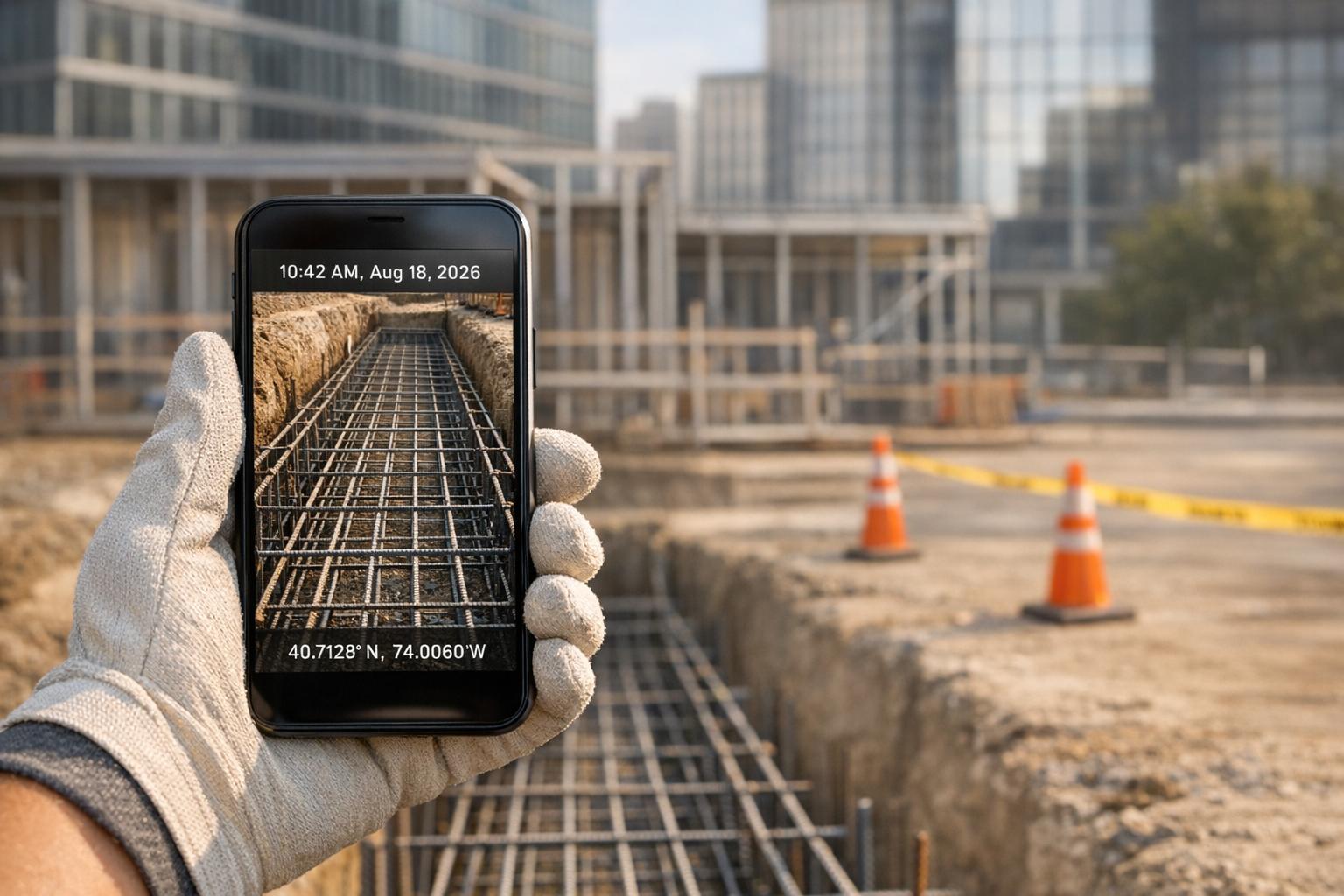
- GPS and time-stamped photos: Each photo is automatically tagged with exact GPS coordinates and a timestamp, creating an unchangeable record. This eliminates disputes over when and where photos were taken, which can be critical during project reviews or legal cases.
- Unlimited cloud storage: Forget about running out of space or deleting older photos. RelayCam preserves the entire visual history of a project, which proves invaluable for warranty claims, insurance issues, or inspections - even years after completion.
- Team collaboration: RelayCam allows multiple team members - like field supervisors or subcontractors - to contribute photos. Each image is tracked by user, time, and location, ensuring accountability and full coverage.
- Live project feed: Real-time updates keep everyone informed. When a photo of an issue is uploaded, the right team members get notified immediately, helping resolve problems before they escalate.
- Offline mode: On sites with poor internet connectivity, RelayCam still captures GPS-tagged and timestamped photos. Once back online, the photos sync automatically, preserving their metadata.
Adding Details with Photo Annotations and Checklists
Photos alone don’t always tell the whole story. RelayCam enhances documentation with tools that add context and consistency:
- Annotating jobsite photos: Users can draw, add text, and highlight areas of concern directly on photos. For instance, a picture of a concrete pour might look fine, but annotations can point out inconsistencies or weather-related issues. These details become part of the permanent record.
- Photo checklists: Custom checklists ensure teams consistently document key elements. From foundation inspections to final walkthroughs, these lists guide field teams to capture everything necessary, reducing the risk of missing important details.
- Notes and comments: Add searchable text explanations to photos without cluttering the image itself. Need to find all photos related to "rework" or "inspection"? A quick keyword search makes it effortless.
These features make documentation thorough, consistent, and easy to reference - even months or years later.
Sharing and Storing Audit Trails
Audit trails need to be secure yet accessible to the right people. RelayCam simplifies sharing and storage with features like:
- Sharable photo galleries: Create tailored collections for different audiences. Clients might see progress milestones, while insurance adjusters get incident-specific galleries. These galleries retain all metadata, including timestamps and GPS info.
- External sharing links: Share project photos with stakeholders - like architects or inspectors - without requiring them to create accounts. This makes collaboration smoother and faster.
- Desktop access: For detailed reviews or bulk organization, RelayCam’s desktop interface is invaluable. It’s perfect for categorizing photos or preparing documentation for project closeouts.
RelayCam’s cloud-based infrastructure ensures long-term photo quality and metadata preservation, unlike physical storage methods that degrade over time. Paper-based systems, for example, waste an average of 127 hours per project, while digital solutions like RelayCam cut that time by 82%. With advanced search and filtering options, teams can quickly locate photos based on date, GPS data, or keywords - even years down the line. This transforms audit trails from static records into active tools for improving future projects.
Protecting Data Integrity and Security
Audit trails are only as effective as their reliability. If even a single photo is altered or a timestamp is inaccurate, it can jeopardize the entire documentation process. This can lead to major setbacks, whether you're dealing with disputes or trying to meet construction photo documentation standards. That's why having security measures that not only safeguard data but are also easy for teams to use is so important in construction projects. These measures uphold the credibility of every recorded detail.
Construction projects are often under the microscope, whether by regulators, insurance companies, or legal teams. When photos play a role in high-stakes disputes, every layer of security becomes a safeguard for the project's integrity.
Secure Storage and User Access
Cloud-based storage has revolutionized how construction teams manage photo documentation. Unlike physical storage, which is vulnerable to damage or loss, cloud platforms deliver robust protection for audit trails.
RelayCam takes this a step further by encrypting all photos and metadata during both transmission and storage. Access is tightly controlled through tools like multi-factor authentication and role-based permissions, ensuring only authorized individuals can view or modify data. This approach keeps the audit trail intact and defensible, even in disputes.
Every action - whether it's viewing, downloading, or sharing - is logged with details about the user, time, and device. This creates a comprehensive chain of custody, which can be critical for legal cases or insurance reviews.
Meeting Industry Standards
Secure storage is just one piece of the puzzle. Construction projects must also meet a variety of legal and regulatory standards, and audit trails are essential for proving compliance. RelayCam's timestamped and GPS-tagged photos provide the documentation needed for inspections and regulatory reviews.
For example, environmental regulations often require visual evidence to confirm proper procedures were followed. The embedded location and timing data in each photo offer proof that these steps were taken. Similarly, compliance with building codes hinges on having clear visual records that demonstrate work was completed to the required standards. RelayCam's organized project structure simplifies the process of presenting this documentation in an acceptable format.
Insurance companies are increasingly demanding detailed visual evidence for claims. A well-maintained audit trail not only satisfies these demands but also reduces the likelihood of disputes over claims. In legal scenarios, photo evidence must be authentic and unaltered. RelayCam's automatic timestamping, GPS tagging, and user tracking work together to create a reliable chain of custody, ensuring the evidence meets these stringent standards.
Data Backups and Validation
Even with the most secure systems, backups are essential to ensure data remains accessible over the long term. Construction projects often span years, and their documentation must remain intact long after the final phase is completed.
RelayCam uses automated backup systems to create multiple copies of photos and metadata, storing them in geographically diverse data centers. This reduces the risk of data loss due to natural disasters or technical failures.
Regular validation checks ensure the integrity of stored photos and metadata, flagging any discrepancies for immediate attention. Additionally, version control keeps a record of all changes to photos or annotations, preserving both the original and updated versions. Routine recovery tests confirm that backup systems are functioning properly, so data can be restored quickly and completely if needed.
Long-term preservation is critical since construction documentation may be required years - or even decades - down the line. By storing data in multiple locations, RelayCam ensures that audit trails remain intact and accessible, no matter how much time has passed. This level of redundancy guarantees that your project records stay reliable for the future.
The Benefits of Reliable Construction Photo Audit Trails
When construction teams establish reliable audit trails for their photo documentation, projects run more smoothly, and disputes are resolved quicker. These trails ensure everyone involved has a clear understanding of what happened, when it happened, and who was responsible.
Main Benefits for Construction Teams
Accountability at every level becomes a cornerstone of project success with audit trails in place. Each photo captures more than just an image - it documents who took it, when it was taken, and its exact location on the jobsite. This level of transparency eliminates confusion about responsibilities and encourages team members to take ownership of their work.
Simplified compliance turns what was once a paperwork-heavy process into something manageable. When inspectors arrive, having photos that are timestamped and GPS-tagged, and organized by project phase, makes regulatory reviews much smoother. Whether it's environmental checks, safety inspections, or building code verifications, these tasks become far less stressful.
Minimized liability protects contractors and clients from expensive disputes. When issues arise regarding work quality, timelines, or safety measures, visual evidence provides clear answers. Insurance claims move faster with detailed photo documentation, and many legal disputes can be resolved without escalating to costly litigation.
Clearer project communication ensures everyone stays on the same page from start to finish. Sharing real-time photos with annotations helps field teams, project managers, and clients stay informed about progress and any emerging issues. This transparency builds trust and prevents minor problems from escalating into major setbacks.
Long-term value extends well beyond the project’s completion. Years down the line, when maintenance questions come up or renovations are planned, having a thorough visual record of the original construction can be invaluable. Property owners appreciate this level of documentation, and it often gives contractors a competitive edge. Reliable audit trails don’t just safeguard projects - they also help maintain continuity and value over time.
To fully capitalize on these benefits, using a tool that supports best practices in audit trail management is key.
Getting Started with RelayCam
RelayCam makes it simple to put these audit trail benefits into practice with its user-friendly features. It automatically captures key metadata - like GPS locations and timestamps - to strengthen your documentation. Tools like on-photo annotations and organized photo storage make audit trails even more reliable. Built-in collaboration and security features ensure seamless integration into your workflow.
With unlimited cloud storage and automated backups, your team won’t need to worry about losing critical documentation. Even in areas with poor connectivity, RelayCam’s offline mode allows photos to be captured and synced automatically once a connection is restored.
Getting started is quick and easy. Teams can begin documenting projects within minutes, using HD photo capture to preserve every detail. Project managers can review and organize photos from the office via desktop login, while field teams continue capturing data on mobile devices.
RelayCam transforms audit trail management from a tedious task into a natural part of the construction process. It gives teams the confidence that their documentation will hold up under scrutiny while supporting project success from the first groundbreaking to the final inspection.
FAQs
How do audit trails for construction photos support legal and compliance needs?
Audit trails for construction photos are essential in legal and compliance situations, offering time-stamped and geo-tagged records of jobsite activities. These records act as solid proof to back up claims, settle disputes, and show compliance with regulations.
By capturing site conditions and progress in a clear and systematic way, audit trails help contractors handle inspections, reduce liability risks, and strengthen trust with stakeholders. They promote accountability and provide a detailed, defensible record of the work completed on-site.
What key features should a construction photo audit trail tool have?
When selecting a tool to manage construction photo audit trails, it's crucial to prioritize features that enhance accuracy and reliability. For instance, automatic time-stamping and GPS tagging ensure every photo is logged with precise details like the date, time, and location, creating a trustworthy record of jobsite activities.
Additionally, look for tools with secure cloud storage to protect your data while keeping it easily accessible. Features like real-time photo updates help keep everyone on the same page, while on-photo annotations allow you to add notes or feedback directly to images. Tools that support simple sharing and team collaboration can further streamline processes and boost accountability across your projects.
How do user tracking and version control improve the accuracy of construction photo documentation?
User tracking and version control bring precision to construction photo documentation by linking every image to a specific user, timestamp, and location. This ensures a dependable record of site conditions, minimizing misunderstandings or potential disputes.
With version control, teams have access to a detailed history of photo updates or changes, ensuring they’re always working with the most current and accurate information. These tools not only boost accountability but also simplify workflows and support compliance throughout the entire project lifecycle.
Related Blog Posts


See RelayCam in action
Start your free trial now by clicking the button below


Wanna chat or demo?
Questions? Concerns? Requests? Talk to a real human

Watch a RelayCam demo now
Short on time, busy, got jobs to do? See how RelayCam works now!